
Late updated: 23 Dec 2025 15:12
Written by: Sarah Hollister
Eco-Friendly Tips For Reducing Garden Maintenance: Simplify Your Green Space
In a world where sustainability has taken centre stage, our gardens can play a pivotal role in creating greener, more eco-friendly spaces. As gardeners, we often face the challenge of maintaining a beautiful and thriving landscape with minimal environmental impact. By embracing eco-friendly practices, we can significantly streamline garden maintenance, reducing both effort and ecological harm.
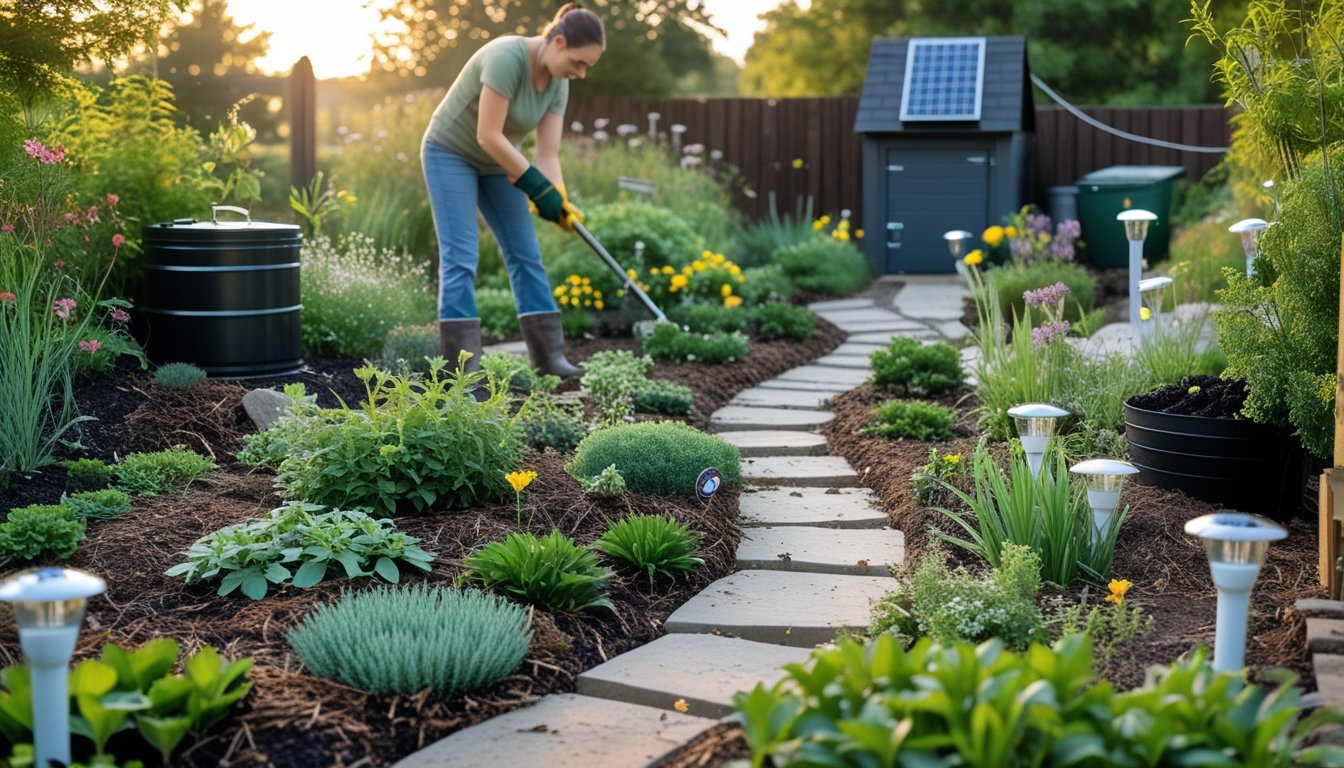
Many people assume that creating an environmentally conscious garden is labour-intensive and time-consuming. Yet, with practical approaches, such as choosing native plants and employing water conservation strategies, it’s possible to cultivate a flourishing garden with less fuss. We can enjoy the beauty of our outdoor spaces while taking important steps towards sustainability.
For those who are eager to transform their gardening routine, understanding these eco-friendly tips is essential. We’ll explore actionable strategies that allow us to enjoy our gardens fully, all while enhancing their resilience and reducing maintenance burdens. Let's delve into how we can achieve eco-friendly garden maintenance with ease and effectiveness.
Key Takeaways
- Streamline garden tasks with sustainable practices.
- Choose native plants for low-maintenance ecology.
- Implement water conservation to ease garden upkeep.
Foundations of Eco-Friendly Garden Maintenance
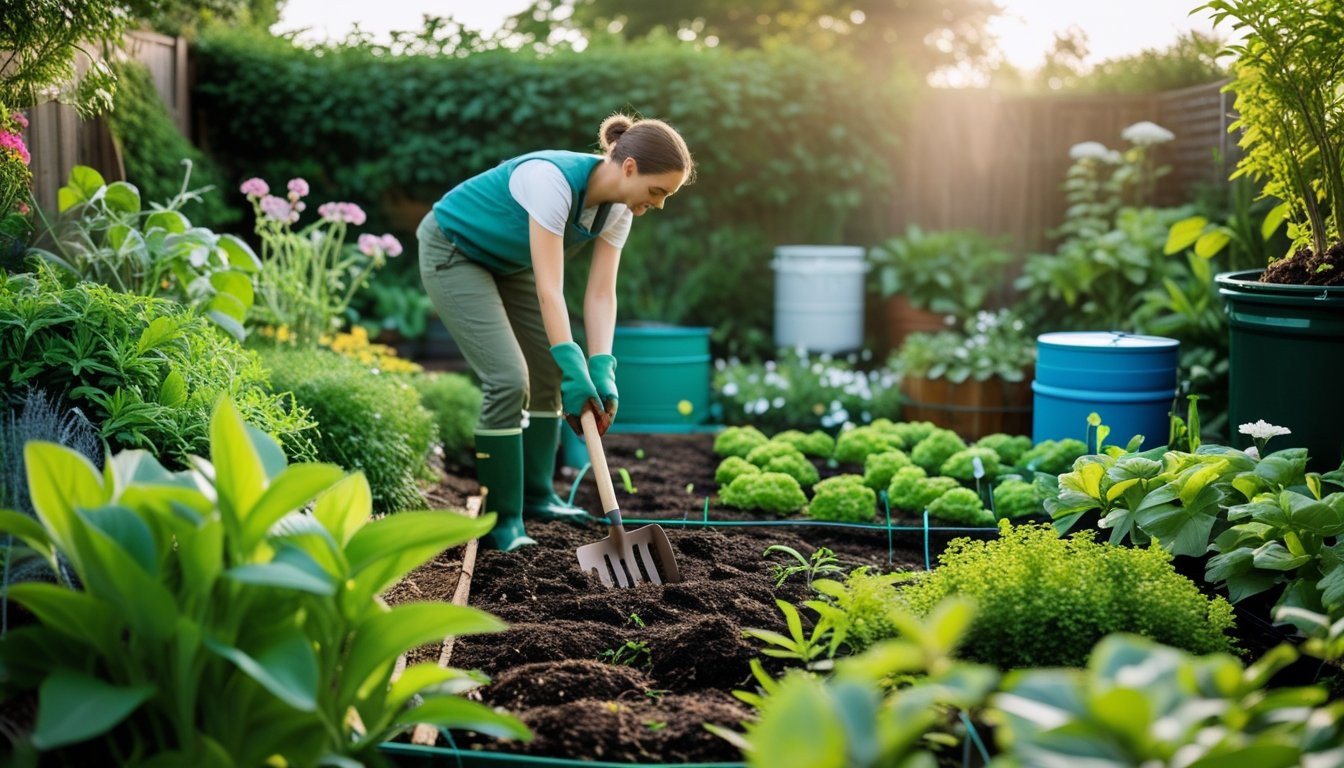
We focus on fostering soil health and reducing water usage, selecting plants that thrive naturally, and enhancing biodiversity. These practices not only cut down on labour but also benefit the environment.
Enhancing Soil Health With Composting and Mulching
Maintaining healthy soil forms the cornerstone of any low-maintenance, eco-friendly garden. Composting enriches soil by adding organic matter, improving its structure and nutrient content. We can create compost from kitchen scraps like vegetable peels, coffee grounds, and eggshells. It's a simple process that turns waste into a valuable resource.
Mulching conserves moisture, suppresses weeds, and regulates soil temperature. Organic mulches such as bark or straw decompose over time, adding nutrients to the soil. This natural process reduces the need for chemical fertilisers. Together, composting and mulching contribute to sustainable gardening by promoting soil health, which in turn supports plant growth and reduces the need for intervention.
Selecting Native and Drought-Tolerant Plants
Our plant choices significantly impact garden maintenance. Selecting native species, which are adapted to the local climate and soil conditions, reduces the need for extra watering and fertilisation. Native shrubs, trees, and flowers require less care and provide food and habitat for local wildlife.
Drought-tolerant plants, such as lavender and succulents, thrive in dry conditions common in many UK gardens, cutting down on water usage. By clustering these plants together, we create microclimates supporting individual growth needs. These selections not only maintain a vibrant landscape with minimal effort but also contribute to a sustainable eco-system that preserves resources.
Promoting Biodiversity and Wildlife Habitats
Creating a garden that encourages wildlife enriches biodiversity. We can install bee hotels and bird feeders to attract beneficial insects and birds that act as natural pest control. A small pond or a water source supports frogs and insects, contributing to a balanced garden ecosystem.
Planting a variety of flowering plants attracts pollinators like bees and butterflies, essential for plant reproduction. Introducing native shrubs and trees provides shelter and food for a range of species. By fostering wildlife habitats, we create an environment where diverse organisms can thrive, making our garden healthier and more resilient.
Practical Strategies for Reducing Garden Maintenance Sustainably
Efficient garden management can significantly reduce the time and effort we invest, while also fostering a healthier ecosystem. By harnessing nature-friendly practices, we can maintain our gardens with minimal environmental impact.
Water Conservation With Rainwater Harvesting and Smart Irrigation
Employing effective water management techniques in our gardens can drastically cut down maintenance time. Rainwater harvesting using rain barrels or water butts is an excellent strategy. These systems collect natural rainfall that we can use to hydrate plants, reducing our reliance on municipal water supplies. Implementing a drip irrigation system further enhances water efficiency. Drip irrigation and soaker hoses deliver water directly to the roots, minimising evaporation and ensuring plants receive the right amount of moisture. Smart irrigation controllers adjust watering schedules based on weather conditions, conserving even more water and supporting healthier plant growth. By integrating these approaches, our gardens thrive with less frequent watering sessions.
Natural Pest Control and Organic Gardening Techniques
To reduce garden maintenance without harming the environment, we should prioritise natural pest control methods. Avoiding chemical pesticides is crucial. We can use neem oil and other organic insect repellents to keep pests at bay safely. Integrated pest management involves monitoring pest levels and applying control measures only when necessary, reducing chemical use and fostering natural predators. Planting marigolds near tomatoes and other crops can repel nematodes and attract beneficial insects. Companion planting and crop rotation not only manage pests but also improve soil health. By adopting these techniques, we maintain a balanced garden ecosystem with minimal intervention.
Minimising Waste and Using Sustainable Materials
Reducing waste and choosing sustainable materials significantly lower our garden's ecological footprint. Recycling materials like compost and garden refuse helps in creating natural fertilisers, enriching the soil without synthetic inputs. Building with reclaimed wood for garden structures, such as planters and benches, is an eco-friendly alternative to new materials. Mulching with leaves, grass clippings, or bark not only conserves soil moisture but also suppresses weeds and adds nutrients as it decomposes. By integrating sustainable garden structures and resources, we commit to a cycle of reuse and responsible consumption, which means less frequent purchase of garden supplies.
Grow Your Own Food for Lower-Impact Gardening
Cultivating your own produce not only reduces trips to the grocery store but also contributes to environmental sustainability. By growing edible plants, we lower our carbon footprint. Featuring systems like vertical gardening can maximise smaller spaces. Selecting fruit trees, rhubarb, or seasonally appropriate homegrown produce creates an abundant supply of fresh food. Additionally, using homemade compost and organic fertilisers nurtures crops without harsh chemicals, promoting soil health. This self-sustaining loop of growing, harvesting, and composting reduces waste significantly and rewards us with nutritious, home-grown delights.
Frequently Asked Questions
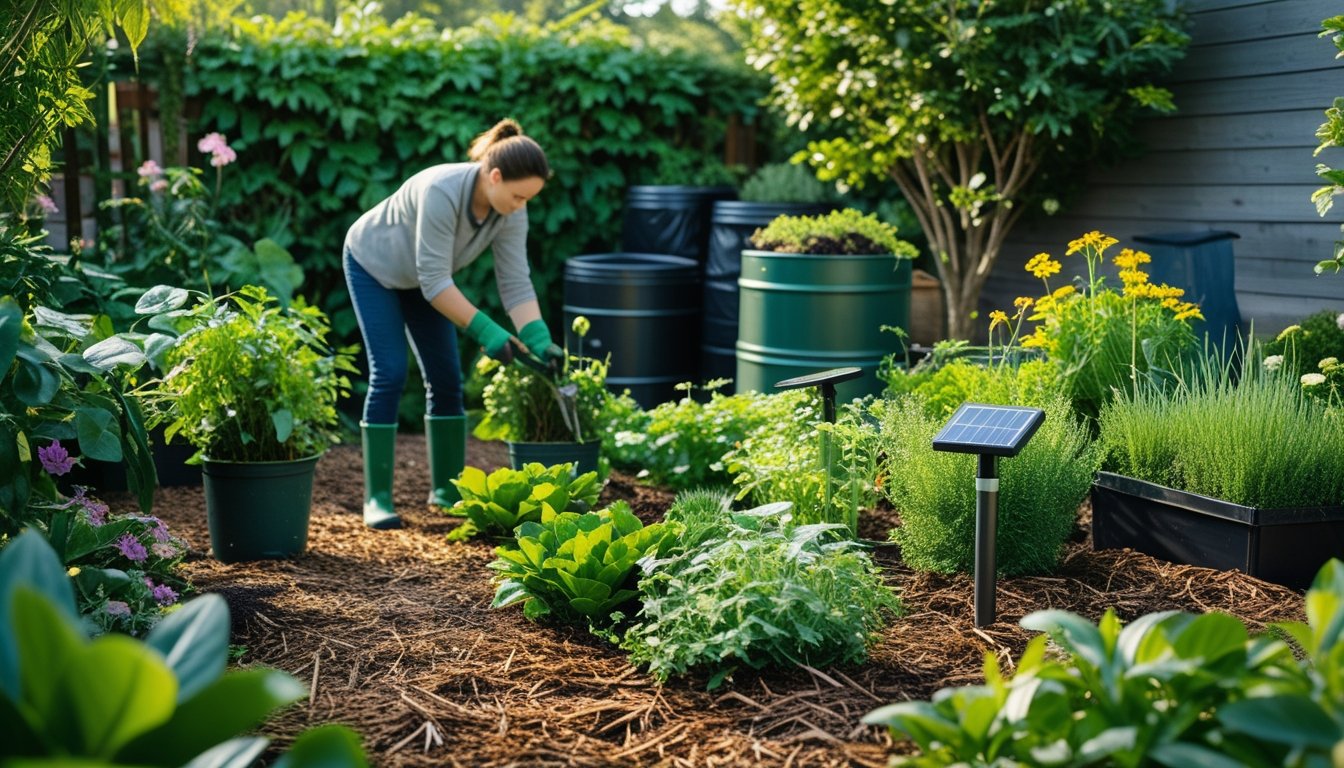
In reducing garden maintenance while maintaining an eco-friendly approach, we emphasise methods like composting, selecting drought-resistant plants, and mulching. Each of these practices enhances garden sustainability and reduces the workload for gardeners.
How can one effectively use compost to reduce garden upkeep?
Using compost wisely can improve soil health, which in turn reduces the need for frequent fertilising. By incorporating compost into the garden, we enrich the soil with essential nutrients, aiding plant growth and decreasing reliance on chemical fertilisers. Additionally, compost helps retain moisture, lessening the frequency of watering.
What are the best drought-resistant plants for a low-maintenance garden?
Choosing the right plants is key to reducing garden maintenance. In our experience, succulents, lavender, and ornamental grasses are excellent drought-resistant options. These plants require minimal watering once established and thrive in various conditions, making them ideal for low-maintenance gardening.
What techniques can be employed to reduce the need for watering?
To save water and time, drip irrigation systems are highly effective. They deliver water directly to plant roots, reducing waste. We also recommend installing rain barrels to capture rainwater for garden use. Grouping plants with similar watering needs can streamline this process further, ensuring efficient use of resources.
How can mulching help in decreasing garden maintenance efforts?
Mulching acts as a protective layer that conserves soil moisture, suppresses weeds, and regulates temperature. By applying mulch, we can significantly cut down on the time spent weeding and watering. Organic mulches, such as wood chips or straw, break down over time, enriching the soil further.
Could you suggest ways to encourage local wildlife to help control pests?
Attracting beneficial wildlife, like birds and insects, aids in natural pest control. Providing birdhouses or planting flowers that attract pollinators and predatory insects can create a balanced ecosystem. In our gardens, we've found that this strategy reduces the need for chemical pesticides effectively.
What are the advantages of using native plants in garden design for maintenance reduction?
Native plants are well-suited to the local climate and require less care, as they are adapted to the conditions present naturally. They typically need less water and fertilisation. By incorporating native species into our gardens, we not only lower maintenance requirements but also support local biodiversity.