
Late updated: 04 Jan 2026 08:01
Written by: Sarah Hollister
Sustainable Practices For Eco-Friendly Pet Ownership: A Comprehensive Guide
In recent years, the push towards more sustainable lifestyles has permeated virtually every part of our lives, including how we care for our pets. As pet owners, we have an opportunity and responsibility to make choices that benefit not only our furry friends but also our planet. Adopting sustainable practices in pet ownership involves choosing eco-friendly products, reducing waste, and supporting greener initiatives.
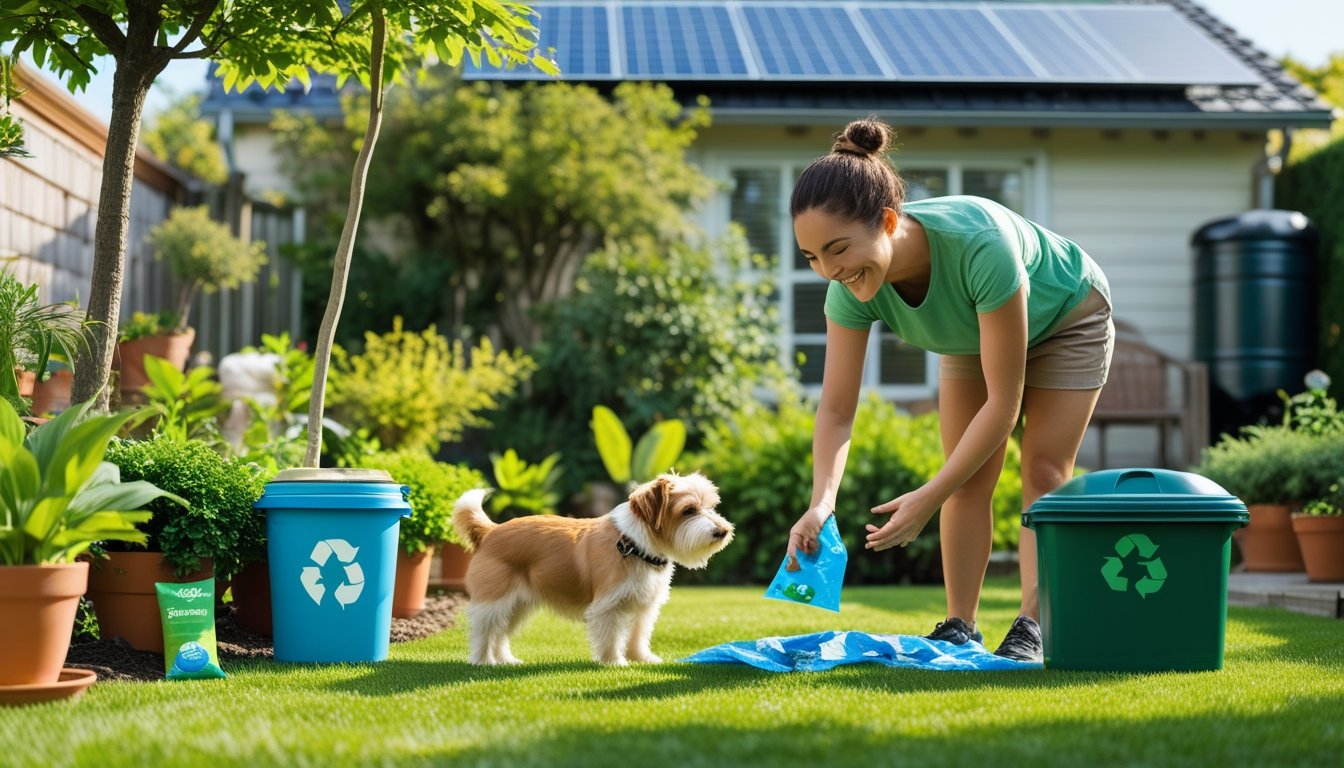
By opting for biodegradable waste bags, sustainable pet foods, and eco-friendly toys, we are able to minimise our pets’ environmental impact while maintaining their quality of life. Furthermore, considering the sustainability of everyday pet care practices can significantly reduce our carbon footprints.
This blog post explores practical ways to implement these strategies. We'll discuss manageable lifestyle adjustments that contribute to a healthier planet, ensuring our furry companions can continue to thrive in a cleaner, greener environment.
Key Takeaways
- Eco-friendly pet choices can reduce environmental impact.
- Sustainable grooming practices benefit pets and the planet.
- Common questions about eco-friendly pet ownership are addressed.
Core Sustainable Practices for Eco-Friendly Pet Ownership
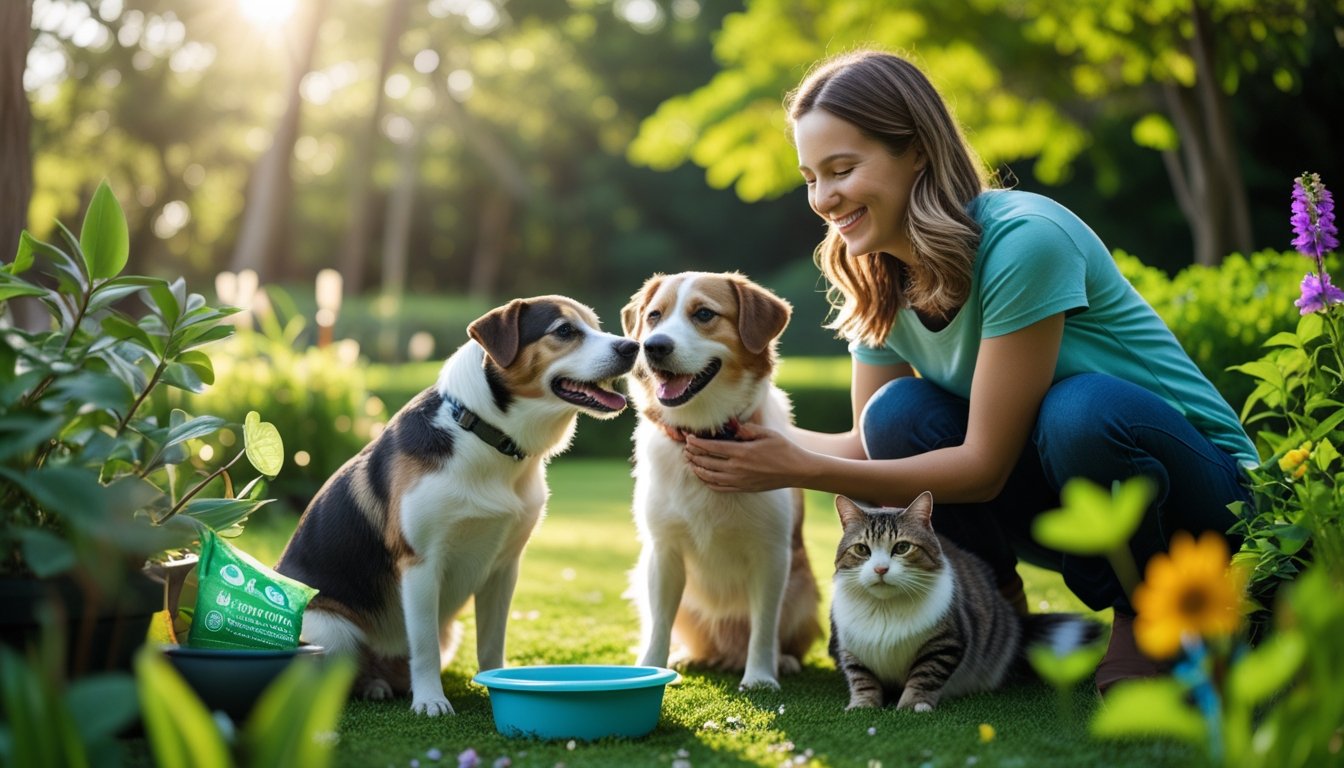
Fostering sustainable pet ownership involves a variety of practices that minimise environmental impact. Key areas include making eco-friendly product choices, adopting sustainable feeding methods, and implementing effective waste management solutions. By adopting these practices, we can reduce our pets' carbon pawprint while maintaining their well-being.
Minimising Environmental Impact Through Responsible Pet Ownership
Responsible pet ownership begins with understanding the environmental impact of our choices. Simple adjustments in our daily routines can make a significant difference. One effective strategy is reducing our pets' carbon pawprint by limiting unnecessary energy consumption at home. This might involve keeping a consistent living temperature, conserving water when bathing pets, or using energy-efficient lighting.
Additionally, supporting green initiatives such as pet-friendly parks or participating in ecological campaigns can further our commitment. It’s essential to be informed about the ecological footprint of our pets’ lives and make conscious decisions. Every small change contributes to a more sustainable future.
Choosing Eco-Friendly Pet Products and Accessories
Opting for eco-friendly pet products is a straightforward yet impactful way to support sustainability. We can start by selecting biodegradable poop bags and flushable cat litter to reduce waste. Recycled materials in toys and bedding also serve as excellent choices for reducing resource consumption.
Sustainable pet products often feature compostable packaging, decreasing waste further. When buying toys, consider those made from natural fibres or biodegradable materials. Consistently choosing these options helps promote industry-wide change, encouraging more manufacturers to adopt sustainable practices. By selecting eco-friendly accessories, we set an environmental standard within our community.
Adopting Sustainable Feeding and Food Storage Practices
Feeding practices offer another realm for implementing eco-friendly habits. Opting for pet food brands that use sustainable packaging or offer products in bulk reduces waste. We recommend storing pet food in reusable containers to maintain freshness and cut down on excess packaging.
Making homemade pet treats using ingredients we already have at home also decreases packaging waste and allows us to control our pets' diets better. It's an opportunity to create nutritious recipes tailored to their needs. This embraces a holistic approach, benefiting both our pets and the planet.
Eco-Friendly Waste Management Solutions
Effective waste management is crucial in reducing environmental harm. Biodegradable waste bags are a practical solution, breaking down faster to lower landfill impact. For waste generated by cats, flushable cat litter presents a more sustainable option than traditional clay litter. Composting pet waste, when done safely and precisely, can be another eco-friendly practice, turning waste into a resource for enriching soil.
By responsibly managing pet waste, we play a direct role in lessening our pets' environmental impact. Small actions, like picking up after our pets and ensuring their waste is disposed of properly, contribute to a healthier ecosystem. The choices we make can inspire a broader movement towards sustainable living.
Sustainable Pet Care and Grooming Choices
Eco-friendly pet care involves integrating sustainable methods into our daily pet routines. By selecting natural and biodegradable grooming supplies and maintaining a sustainable lifestyle, we can reduce our pets' impact on the environment while ensuring their health and happiness.
Natural Pet Care Methods and Products
Focusing on natural pet care involves choosing products made from sustainable materials and opting for practices that support ecological balance. One way is to select pet foods that use locally sourced and organic ingredients, reducing transportation-related carbon emissions. Similarly, natural grooming products like shampoos formulated with plant-based ingredients can minimise toxic runoff into water systems. Using recyclable pet toys made from organic fibres and untreated wood can also contribute to a greener lifestyle, ensuring our pets are well-cared-for without harming the planet.
Selecting Organic and Biodegradable Grooming Supplies
When grooming our pets, selecting organic and biodegradable supplies plays a crucial role in eco-friendly pet care. Choosing shampoos and conditioners made with natural ingredients, free from harsh chemicals, promotes healthy skin while reducing pollution. Additionally, tools like brushes crafted from sustainable materials such as bamboo are both environmentally friendly and effective for pet grooming. With a focus on sustainability, we should also consider using energy-efficient grooming appliances, which consume less electricity and help lower our carbon footprint.
Maintaining a Sustainable Pet Lifestyle
To maintain a sustainable pet lifestyle, it’s essential to make conscious decisions in our overall pet care practices. Regularly composting pet waste using special biodegradable bags reduces landfill contributions and promotes a healthier soil environment. We can also implement water-saving techniques during grooming sessions, such as using a basin instead of running water continuously. By incorporating sustainable habits in every aspect of pet care, we demonstrate commitment to both our pets' well-being and the environment. These steps contribute greatly to a more sustainable future, benefiting not only our pets but also the world around us.
Frequently Asked Questions
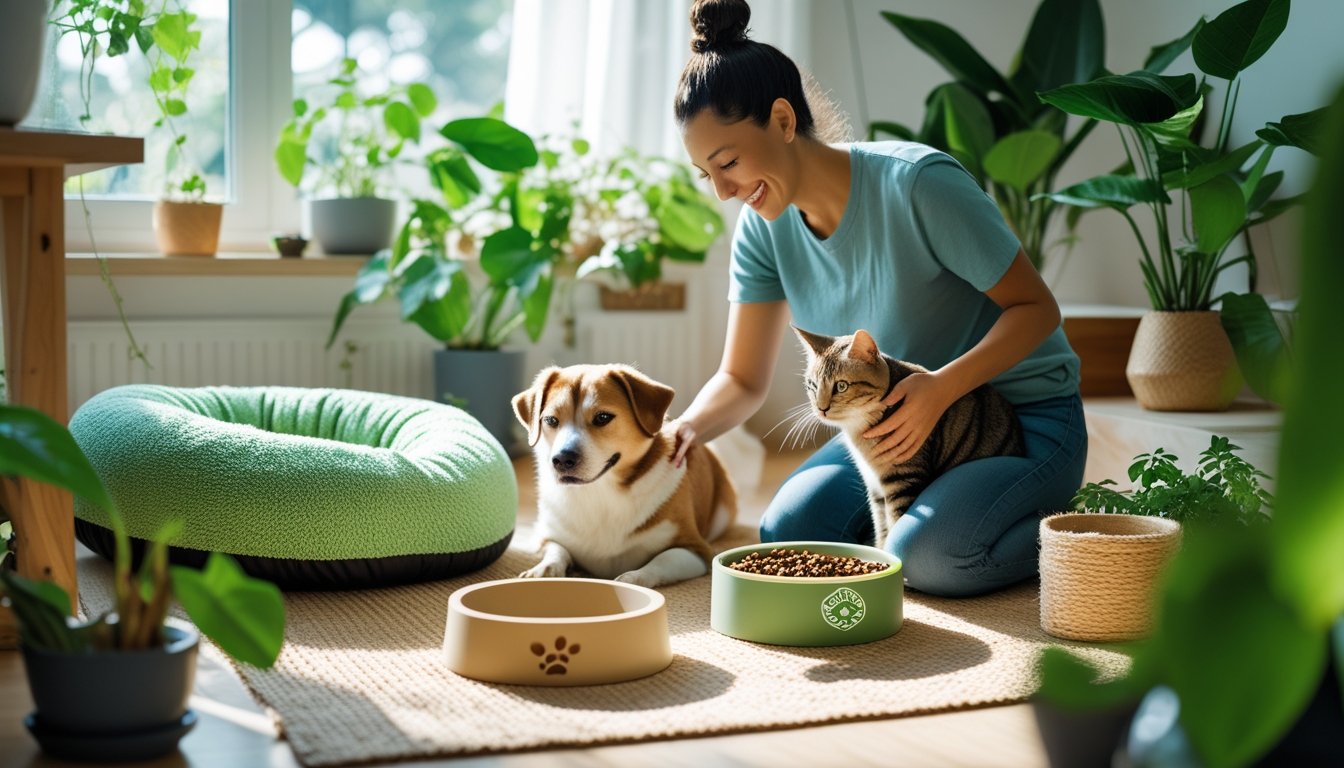
In pursuing eco-friendly pet ownership, we prioritise biodegradable waste products, sustainable diets, and the recycling of pet-related items. Our approach also explores how pet owners can an effective contribute to wildlife conservation.
What types of biodegradable waste products are most suitable for pets?
Biodegradable waste bags made from plant-based materials such as cornstarch are ideal for managing pet waste. They break down naturally, reducing environmental impact. It's important to ensure these products meet compostability standards to guarantee effectiveness.
How can one reduce their pet's carbon footprint effectively?
Selecting sustainable pet food options like plant-based diets or those containing insect protein can significantly reduce a pet's carbon footprint. Managing waste properly and using eco-friendly grooming products further reduces environmental impact.
What are the best practices for recycling pet-related items?
Recycling pet food cans and packaging is a key practice. Opt for brands with recyclable or minimal packaging. Donate old pet toys and bedding to shelters instead of sending them to landfills, which extends their useful life.
How can pet owners ensure their pets have a sustainable diet?
Pet owners should look for sustainably sourced food ingredients, focusing on organic or locally produced options. Nutritional balance is essential, so consulting with a veterinarian ensures that dietary changes promote health alongside sustainability goals.
What eco-friendly materials are recommended for pet toys and accessories?
Toys and accessories made from natural fibres like hemp or organic cotton are excellent choices because they're durable and degrade naturally. Additionally, brands offering recycled or upcycled products contribute to sustainability.
In what ways can pet owners contribute to wildlife conservation?
Contributing to wildlife conservation involves supporting companies and initiatives that protect natural habitats. We can participate in or donate to conservation programmes, promoting harmony between domesticated pets and wild animal protection.