
Late updated: 16 Dec 2025 12:12
Written by: Sarah Hollister
Innovative Eco-Friendly Home Cooking Tips: Sustainable Practices for Everyday Meals
As we navigate the realm of sustainable living, one of the most impactful areas we can focus on is our own kitchen. Embracing innovative eco-friendly home cooking tips not only reduces our environmental footprint but also encourages healthier eating habits. With simple yet effective changes, we can transform our cooking practices into a celebration of sustainability, enhancing both the planet’s health and our own.
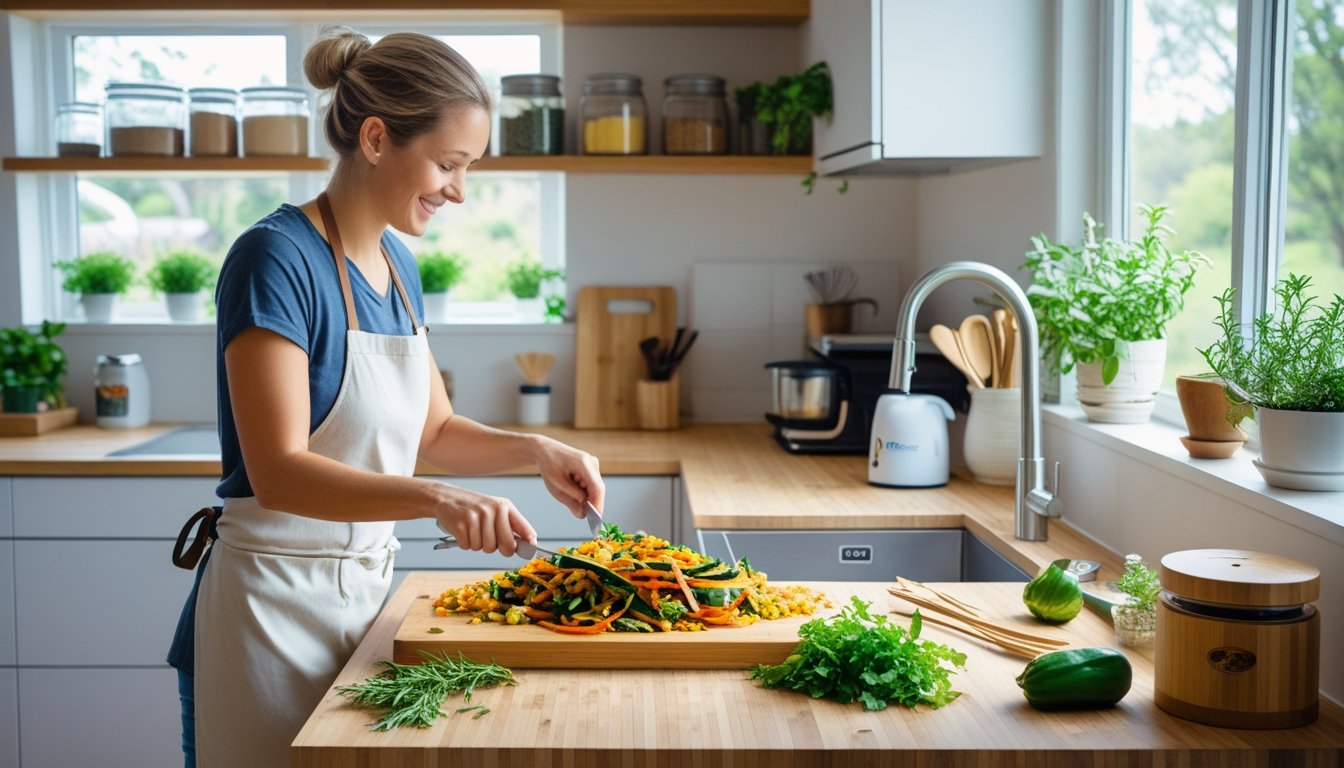
Our kitchens are bustling with potential for eco-friendly transformations. By prioritising local, organic ingredients and investing in sustainable cookware, we can minimise waste and energy consumption. The incorporation of composting food scraps and opting for zero-waste packaging further elevates our commitment to environmentally responsible cooking.
In our continued pursuit of sustainability, it is essential for us to explore practical solutions and tools that make eco-friendly cooking accessible and enjoyable. These innovative approaches create a harmonious blend of cost-effectiveness and health benefits, changing our perception of daily cooking routines.
Key Takeaways
- Experiment with local ingredients and sustainable cookware
- Adopt zero-waste and composting practices
- Use eco-friendly tools for cost-effective solutions
Core Strategies for Innovative Eco-Friendly Home Cooking
To achieve innovative eco-friendly home cooking, we must focus on strategic meal preparation, effective use of leftovers, mindful sourcing of ingredients, and conservation of resources. These practices not only minimise our environmental impact but also enhance the quality and nutrition of our meals.
Mindful Meal Planning and Batch Cooking
Mindful meal planning begins with selecting recipes that utilise ingredients we've on hand, reducing the need for additional shopping trips. Batch cooking plays a crucial role in our eco-friendly cooking strategy, as it allows us to prepare larger quantities of food at one time, optimising the use of energy and resources. By preparing meals in advance, we can avoid waste and save time throughout the week. Storing these meals in reusable containers helps cut down on single-use plastics. Additionally, organising our meal calendar to include diverse, nutrient-rich dishes ensures that we cover all food groups while supporting sustainable practices.
Minimising Food Waste with Inventive Leftover Use
Reducing food waste is pivotal for sustainable cooking. We can get creative with leftovers by incorporating them into new meals. For instance, leftover vegetables can transform into hearty soups or stir-fries. Stale bread might become a delicious crouton topping or bread pudding. Composting scraps that can't be consumed ensures we contribute to nutrient cycling without resorting to landfill disposal. By maintaining an inventive mindset, we turn potential waste into culinary opportunities, drastically lowering our environmental footprint while saving money.
Sourcing Local, Seasonal, and Organic Ingredients
Our ingredient sourcing decisions have a significant impact on sustainability. By choosing produce that's local and in-season, we reduce the carbon footprint associated with transportation. Seasonal ingredients are often fresher and cost-effective. Additionally, buying directly from local farmers supports the community and ensures we consume products grown under regulations that favour ecological balance. Opting for organic products whenever available promotes sustainable farming practices that avoid synthetic pesticides and fertilisers, further enhancing the environmental benefits of our cooking efforts.
Reducing Energy and Water Consumption in the Kitchen
Minimising resource usage is fundamental to eco-friendly cooking. Investing in energy-efficient appliances, such as those with an Energy Star rating, can substantially reduce energy consumption. Simple practices like using the right-sized pan for the hob and keeping lids on while cooking help save energy. Similarly, when washing dishes or produce, utilising a dishwasher on an eco-setting or a water-saving tap attachment contributes to significant water conservation. These small changes, when combined, lead to a noticeable reduction in our kitchen's carbon footprint and greenhouse gas emissions, aiding the planet without compromising our culinary efficiency.
Practical Solutions and Tools for a Sustainable Kitchen
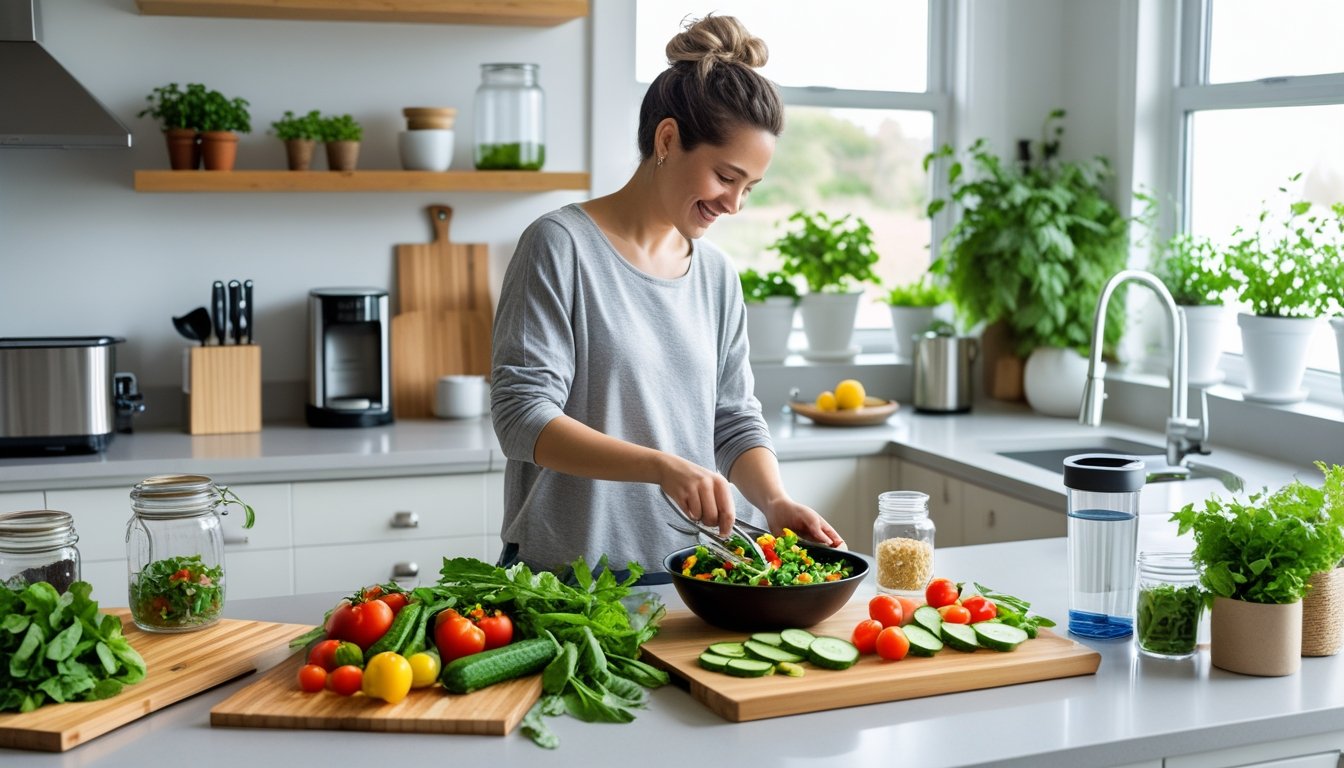
Creating a sustainable kitchen is about adopting eco-friendly practices and utilising tools that minimise waste and maximise efficiency. Focusing on the right equipment, reducing single-use plastics, and choosing sustainable food options can significantly decrease our environmental impact.
Eco-Friendly Cooking Equipment and Storage
Utilising energy-efficient appliances and sustainable cookware is crucial in our journey toward an eco-friendly kitchen. Consider upgrading to an induction cooktop, which uses electromagnetic energy and is more efficient than traditional gas stoves. These not only cook food quickly but also conserve energy. Likewise, using an air fryer or a pressure cooker can reduce cooking time and energy usage.
For storage, we advocate using glass containers due to their durability and non-toxic nature. Airtight containers help maintain food freshness, reducing waste. Beeswax wraps offer a reusable alternative to cling film, while silicone baking mats replace single-use baking paper. Each choice contributes to a greener cooking environment by cutting down on waste products and reducing our footprint.
Innovative Techniques to Reduce Single-Use Plastics and Packaging Waste
Reducing packaging waste is essential for sustainability. We can make a substantial difference by choosing products with compostable packaging or buying in bulk to minimise plastic use. For daily routines, reusable bags and containers should become kitchen staples. These simple switches can drastically reduce our reliance on plastic.
Recycled aluminium foil offers an eco-conscious alternative to traditional foil. We can further cut down on kitchen waste by implementing a compost bin on the countertop to collect food scraps and coffee grounds. Composting helps in repurposing waste into valuable resources for gardening, enriching soil, and supporting plant growth, which blends efficiency with environmental conscientiousness.
Plant-Based Cooking and Sustainable Protein Choices
Transitioning to plant-based meals is an impactful step towards sustainability. Initiatives like Meatless Monday encourage us to explore plant-based proteins such as tofu, lentils, and quinoa, which provide essential nutrients without the resource intensity associated with meat production.
Engaging in mindful meal planning, we can support local agriculture by purchasing from community gardens and local farmers. By growing our own herbs and using seasonal produce, we can reduce the carbon footprint associated with food transport. These practices not only support sustainable cooking but also enhance the flavour and nutritional profile of our meals.
Frequently Asked Questions
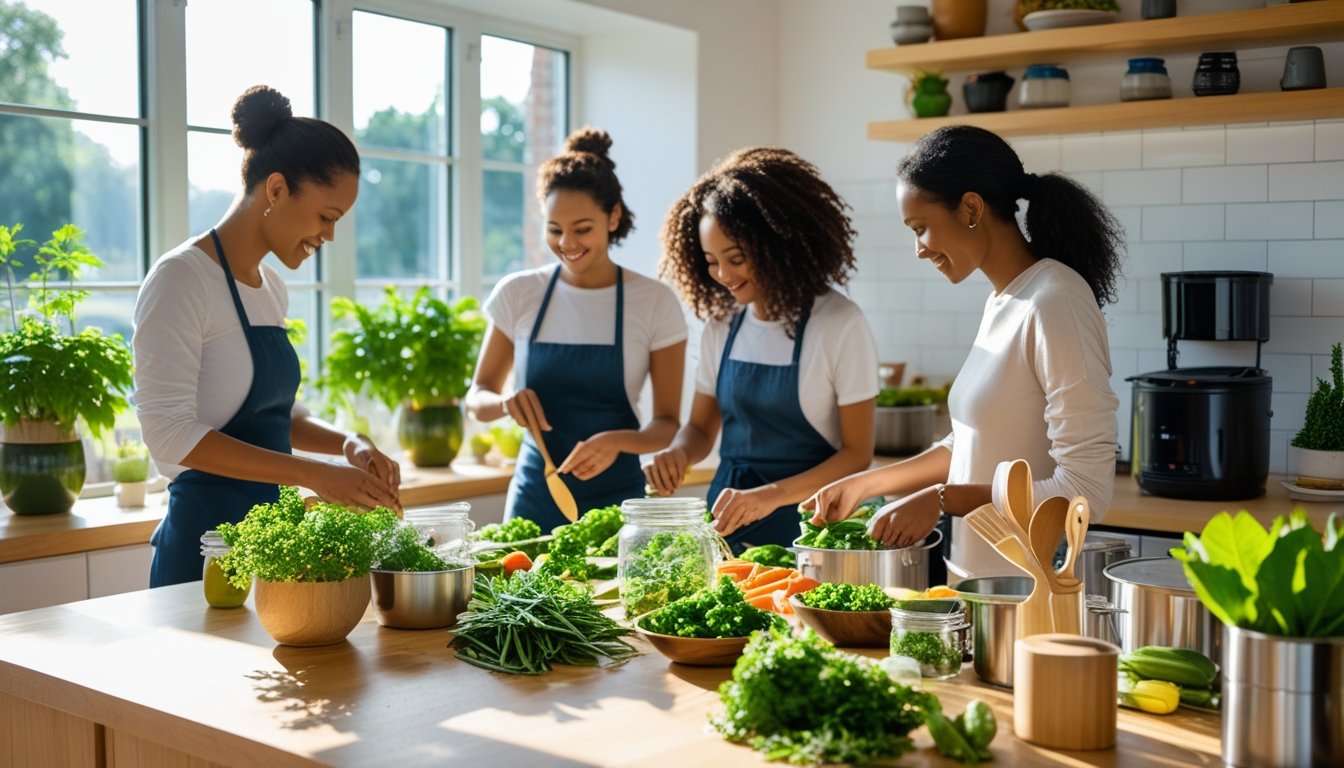
Taking small steps can make a significant impact on how eco-friendly our cooking habits are. By reducing energy consumption, minimising waste, and using sustainable materials, we can create an environmentally conscious kitchen.
How can I reduce energy usage while cooking?
There are several approaches to conserve energy in the kitchen. Utilising appliances like pressure cookers or convection ovens can speed up cooking times and use less energy. Ensuring proper pot and pan size on burners and covering pots with lids can also conserve energy by trapping heat.
What are the best practices for waste reduction in the kitchen?
Reducing waste involves planning meals to use up ingredients effectively and composting organic scraps. Purchasing items with minimal packaging and recycling when possible also contribute to waste reduction.
Which sustainable materials should I consider for kitchenware?
Opt for kitchenware made from sustainable materials like bamboo, stainless steel, or recycled glass. These materials are durable, reduce the need for frequent replacements, and have less environmental impact compared to plastic.
Can you suggest some water-saving techniques for food preparation?
Saving water can be as simple as using a bowl to wash produce instead of letting the tap run. Reusing pasta water for plants and using a low-flow faucet fixture are effective methods.
What are effective ways to store food to maximise freshness and minimise waste?
Using airtight containers and storing items properly in the refrigerator can extend the freshness of foods. Freezing leftovers and labelling them with dates helps minimise food waste.
How can I integrate locally sourced produce into my meals more effectively?
Locally sourced produce can be incorporated by visiting farmers' markets or joining a community-supported agriculture (CSA) programme. Planning meals around seasonal ingredients also helps integrate local produce effectively.