
Late updated: 20 Dec 2025 12:12
Written by: Sarah Hollister
Green Architecture Trends for Urban Environments: Innovations and Strategies
Green architecture trends are transforming our urban landscapes, paving the way for cities that harmonise built environments with nature. As architects increasingly integrate sustainability into their designs, urban spaces are evolving to support eco-friendly living. Vertical forests, rain gardens, and eco-roofs are just a few examples of how nature is being woven into the urban fabric.
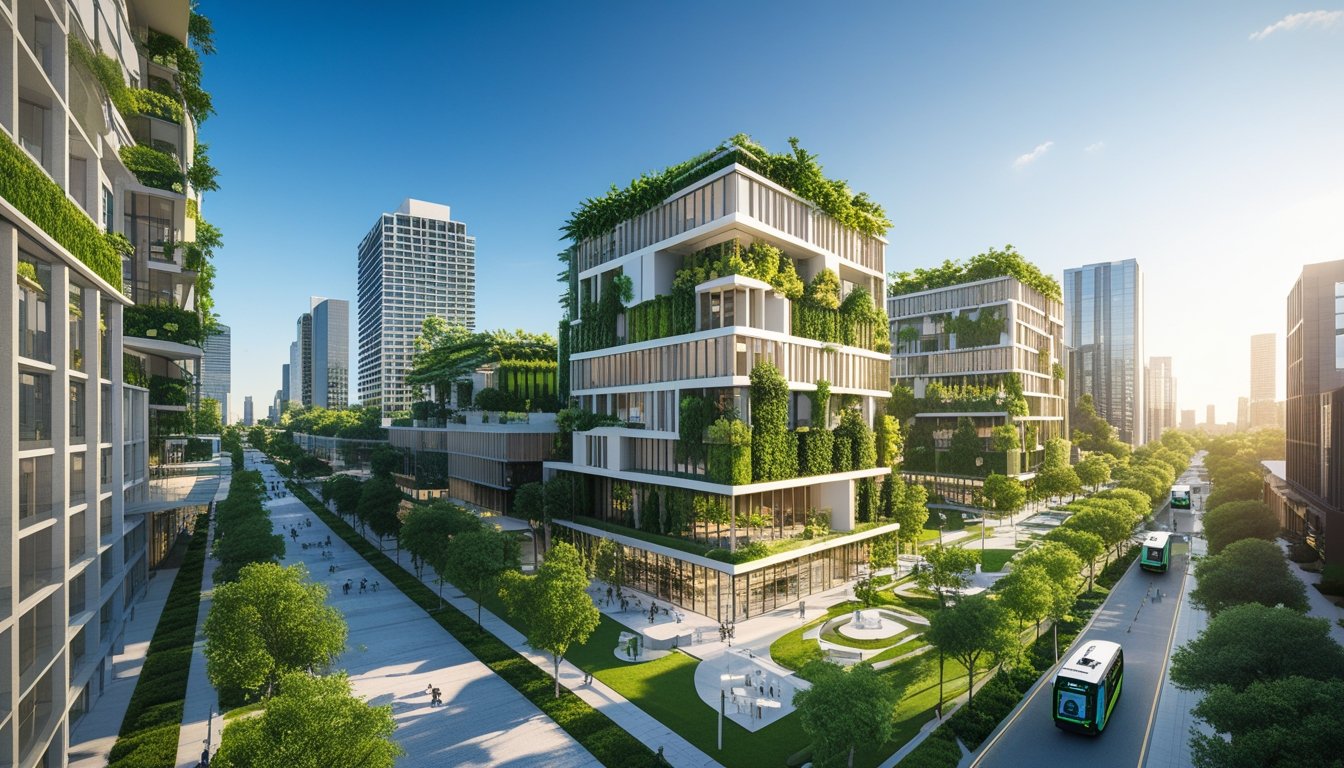
By harnessing cutting-edge technologies and innovative practices, we can create cities that are not only sustainable but also vibrant and healthy places to live. Design approaches such as biophilic design and net-zero buildings demonstrate a shift towards greener urban development, reflecting our growing commitment to environmental responsibility and resource efficiency. These trends are vital for building cities that thrive in the face of climate change and urban expansion.
As we embrace these innovative strategies, the challenge lies in balancing modern urban lifestyles with the preservation of our natural surroundings. Our continued investment in green architecture promises a future where cities are resilient, equitable, and in harmony with the environment.
Key Takeaways
- Green architecture integrates nature into urban environments.
- Innovative practices and technologies support sustainable cities.
- Increasing environmental responsibility shapes urban development.
Cutting-Edge Green Architecture Trends in Urban Environments
Green architecture is continually evolving as we strive to create more sustainable urban environments. Focusing on living walls, green rooftops, and biophilic design principles, these trends shape the future of our cities, improving air quality and enhancing the well-being of urban dwellers.
Integration of Living Walls and Vertical Gardens
Incorporating living walls and vertical gardens is revolutionising urban architecture. These systems not only contribute to biodiversity by providing habitats for various species but also play a pivotal role in enhancing air quality. By filtering pollutants and absorbing CO2, living walls help combat the detrimental effects of urban living. Moreover, these structures can regulate temperatures, offering natural insulation and subsequently reducing energy use in buildings.
Urban planners and architects are pushing for the inclusion of living walls in city landscapes not just for environmental benefits. They also offer aesthetic improvements, transforming bland cityscapes into vibrant, lush environments. Through innovative irrigation systems and careful selection of plant species, these structures can thrive in space-limited urban areas, improving the health and mood of who experience them daily.
Emergence of Green Roofs and Rooftop Gardens
The introduction of green roofs and rooftop gardens represents a significant shift towards more sustainable urban environments. These green spaces mitigate the urban heat island effect by regulating temperature, reducing ambient urban temperatures. By acting as natural insulation, they lower heating and cooling demands, increasing energy efficiency in buildings.
Green rooftops serve another purpose beyond environmental impact, providing urban residents access to green spaces which are often scarce in city settings. They contribute to urban biodiversity, supporting pollinators and bird species. As more city planners recognise these benefits, we see an increase in regulations and incentives to incorporate green roofs into urban design, promoting a sustainable model for future development.
Biophilic Design Principles and Their Urban Impact
Biophilic design is central to the integration of natural elements in urban architecture, focusing on the relationship between humans and nature. This approach encourages the use of natural light, ventilation, and vegetation, creating spaces that enhance our connection to the environment. Urban living benefits significantly from biophilic elements, as they are known to improve mental health and productivity.
Incorporating smart building technologies, such as automated shading systems, enhances energy efficiency while maintaining comfort in urban settings. By bringing the outside in, biophilic design not only enriches the aesthetic value of cityscapes but also promotes sustainable architecture. As we continue to embrace these principles, our urban environments become more conducive to holistic well-being and ecological balance.
Innovative Sustainable Practices and Technologies Shaping Urban Spaces
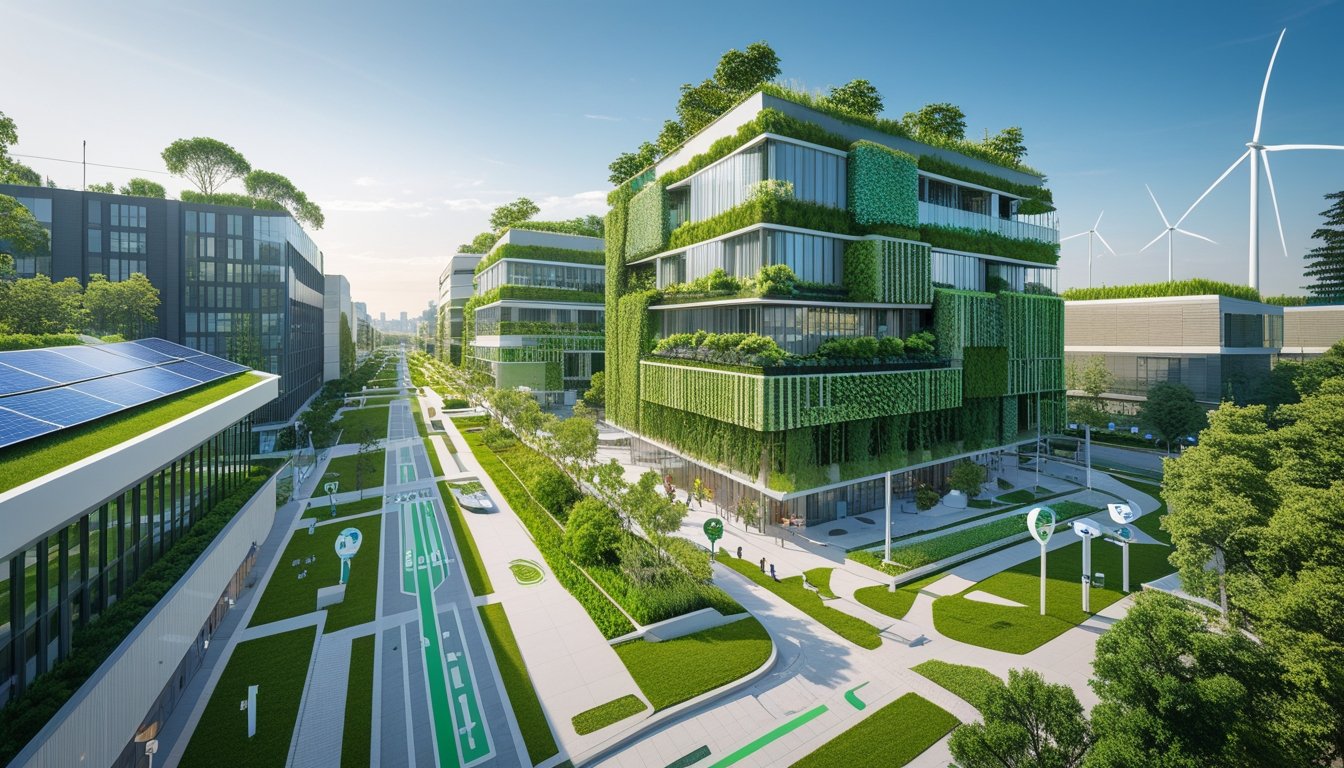
In recent developments, urban architecture is sharply focusing on integrating sustainability with innovation. This manifests in ground-breaking practices such as utilising energy-efficient materials, integrating smart energy technologies, and embracing circular economy principles alongside eco-friendly construction methodologies.
Energy-Efficient Building Materials and Natural Insulation
In our ongoing effort to enhance building performance, utilising energy-efficient building materials has become paramount. Sustainable materials such as recycled steel, bamboo, and reclaimed wood are gaining traction for their minimal environmental impact and excellent durability. These materials significantly lower energy consumption during construction.
Natural insulation materials like sheep’s wool and cork help improve energy efficiency by providing superior thermal resistance. This, in turn, results in notable energy savings by minimising heating and cooling needs. Passive solar design — harnessing the sun’s energy through building orientation and design — further boosts efficiency, reducing reliance on external energy sources.
Smart Energy Management and Renewable Energy Integration
Advances in smart building technologies have revolutionised energy management in urban environments. Today, smart energy management systems effectively track and optimise energy consumption, leading to significant reductions in resource wastage. Utilising smart thermostats and energy modelling tools allows real-time adjustments, ensuring optimal energy use tailored to current needs.
Integration of renewable energy sources like solar panels and wind turbines plays a crucial role in sustainable urban development. These technologies enable buildings to generate their energy, reducing dependency on non-renewable sources. The result is a substantial decrease in environmental footprint while actively contributing to the energy grid.
Adaptive Reuse, Circular Economy, and Eco-Friendly Construction
Embracing adaptive reuse and the principles of the circular economy underscores our commitment to sustainability. By repurposing existing structures rather than demolishing and rebuilding, we reduce waste associated with demolition and limit the need for new raw materials. This approach not only preserves historical architecture but also contributes to more sustainable urban landscapes.
Eco-friendly construction is further enhanced by implementing greywater recycling systems and adopting sustainable materials that meet sustainability standards. This methodology allows projects to minimise resource consumption and environmental impact from the outset. Our policies and sustainable design practices ensure that urban spaces are not only livable but also resilient to future environmental challenges.
Frequently Asked Questions
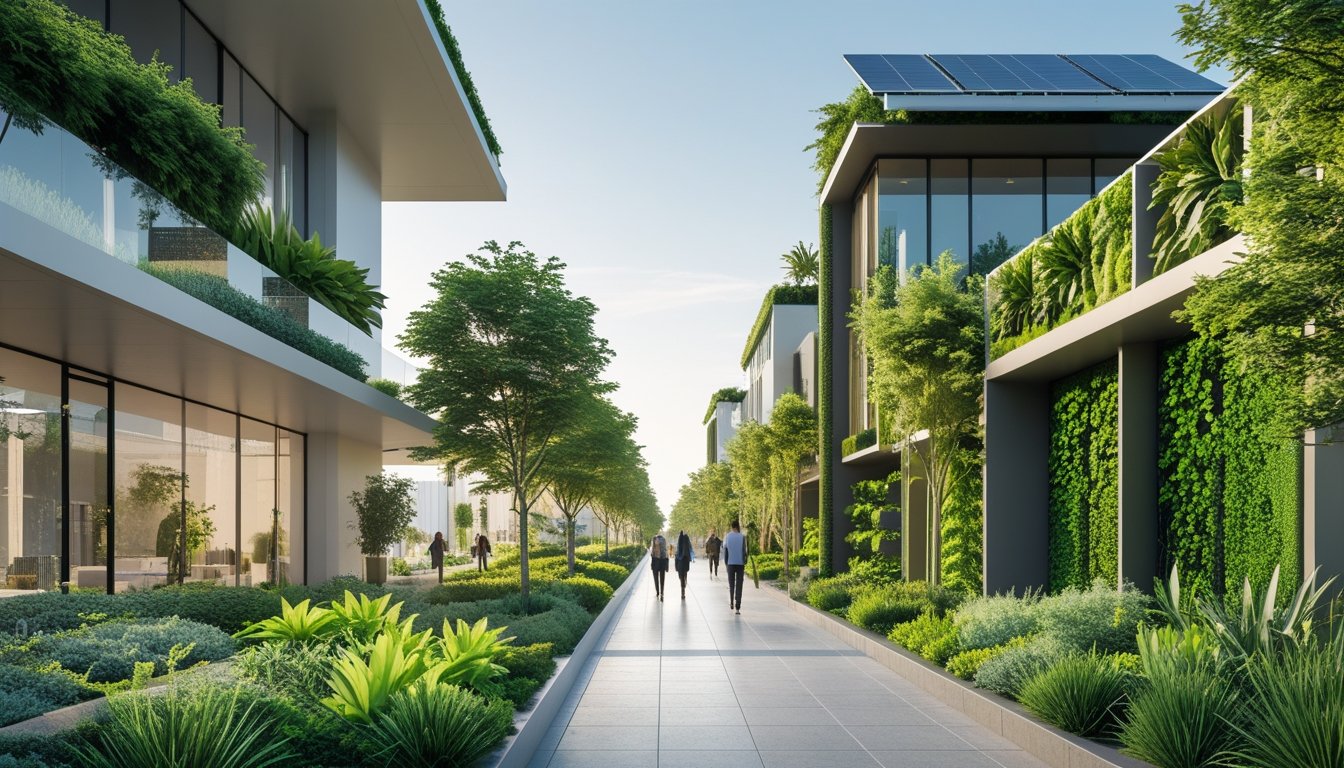
Urban green architecture is at the forefront of redefining how cities grow and sustain themselves. By prioritising sustainable materials, integrating renewable energy, and adopting innovative water conservation practices, we can significantly enhance urban living standards while mitigating environmental impacts.
What are the leading sustainable materials used in urban green architecture?
In green architecture, materials like bamboo, reclaimed wood, and recycled metal are favoured for their sustainable properties. These materials not only reduce waste but also have a lower environmental footprint compared to traditional building materials. Additionally, advances in technology have made it possible to develop materials like aerogel and insulated concrete forms that further enhance energy efficiency.
How can urban environments integrate renewable energy sources in building design?
Solar panels, wind turbines, and geothermal systems are commonly incorporated into urban buildings to harness renewable energy. Solar panels, for instance, can be installed on rooftops or integrated into building facades. Moreover, urban planners are exploring community energy grids that utilise renewable sources, providing sustainable energy solutions on a larger scale.
What are the best practices for water conservation in green urban developments?
Water conservation in urban green developments often involves the use of rainwater harvesting systems and greywater recycling. Technologies such as permeable pavement also play a crucial role by reducing runoff and allowing natural groundwater recharge. Implementing low-flow fixtures and efficient irrigation systems is another method to conserve water resources effectively.
How does green architecture contribute to the well-being of urban residents?
Green architecture enhances urban living by improving air quality, providing natural light, and incorporating elements of nature into daily environments. These factors have been shown to reduce stress levels and increase overall well-being. The integration of communal green spaces further promotes a sense of community and offers spaces for leisure and relaxation.
What is the role of green roofs and vertical gardens in urban settings?
Green roofs and vertical gardens contribute significantly to energy efficiency and aesthetic appeal. They act as natural insulators, reducing heating and cooling demands. These features also improve air quality and support biodiversity by creating habitats for various plant and animal species.
How does urban green architecture address the challenge of limited space?
Green architecture employs creative design strategies such as multifunctional spaces and flexible design to make efficient use of limited urban space. Vertical expansion and the use of compact, modular designs also help maximise available space without compromising sustainability. In crowded cities, these approaches allow for sustainable growth and a balanced urban ecosystem.